
Let’s be real. Your old Black Friday playbook? Yeah, it’s toast.
Black Friday’s Different This Year.
The 2025 shopper isn’t stumbling onto your Black Friday deal, they’re arriving to validate a decision they’ve already researched.
Boston Consulting Group‘s study found that almost half of shoppers are now using AI to help them shop. They’re running quick comparisons between your offer and your top competitors, checking prices, features, even how trustworthy your brand looks.
Last year, retail web traffic dropped by 4.3%, but online sales still went up. That says a lot, the casual browsers are staying home, and the ones who do show up are ready to buy. That’s why conversion rates are climbing, hitting a solid 5.3% on Cyber Monday alone.
Your landing page’s job has shifted.
Today’s visitors aren’t just curious. They’re intentional. They’ve done their homework.
So by the time they land on your page, most have a shortlist in mind and one question left:
“Is this really the best deal for me?”
- It is now there to justify a pre-researched decision faster and more clearly than your competitors.
- If they have to dig around for the price, wonder if the discount’s real, or go hunting for your return policy, it’s game over.
Psychological Methods to Maximise Conversions
The Intentional Shopper might be data-driven, but they’re still human.
Here are the four psychological triggers that top marketers and designers use to turn interest into “I need this”, along with real examples and some handy ideas for how you can use them right now.
1. Urgency: The Fear of Missing Out (FOMO)
With the context of the intentionalized shopper in mind, let’s take advantage of that intention to buy and turn it into an opportunity. We might not need to educate them on features and benefits like before.
Let’s focus on the why and the why right now.
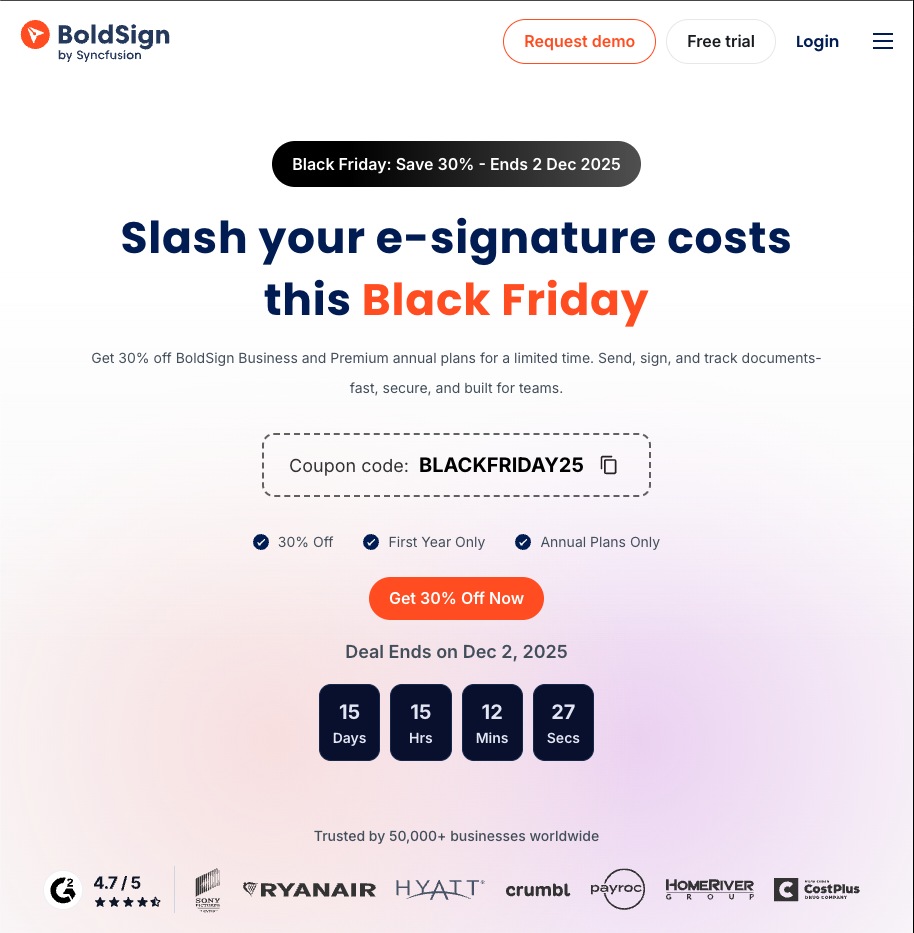
We’re naturally wired to hate losing something more than we love gaining it. That’s why the idea of missing out on a big discount hits so hard, especially during Black Friday and Cyber Monday.
| Psychological Trigger | Landing Page Application | The Benefit to You |
| FOMO (Fear of Missing Out) | Countdown Timers: A live, ticking clock is the most direct application. It must accompany a definitive deadline: “Offer expires at midnight PST on Cyber Monday.” | Forces an immediate, System 1 decision. Removes the option of “I’ll come back later.” |
| Time-Sensitive Copy | Use direct, active, and precise language in headlines and CTA buttons: “Last Chance,” “Deal of the Hour,” or “Selling Fast.” | Instantly communicates high demand and a dwindling window of opportunity. |
| Flash Sales | Create distinct, short-term offers (e.g., “Hourly Flash Sales”). | Creates a reason for high-intent visitors to stick around and return frequently, increasing the probability of a conversion. |
People might use their devices differently when shopping for deals. If you’re going to use interactive elements, check they work on different viewports! Consider whether your page should be mobile-first.

2. Scarcity: Assigning Value Through Limitation
The less available something is, the more value our brains assign to it. If an item is “limited,” our brain quickly translates that into “high demand,” “high quality,” and “must-have.” Scarcity goes hand in hand with desirability – and ties in nicely with FOMO.
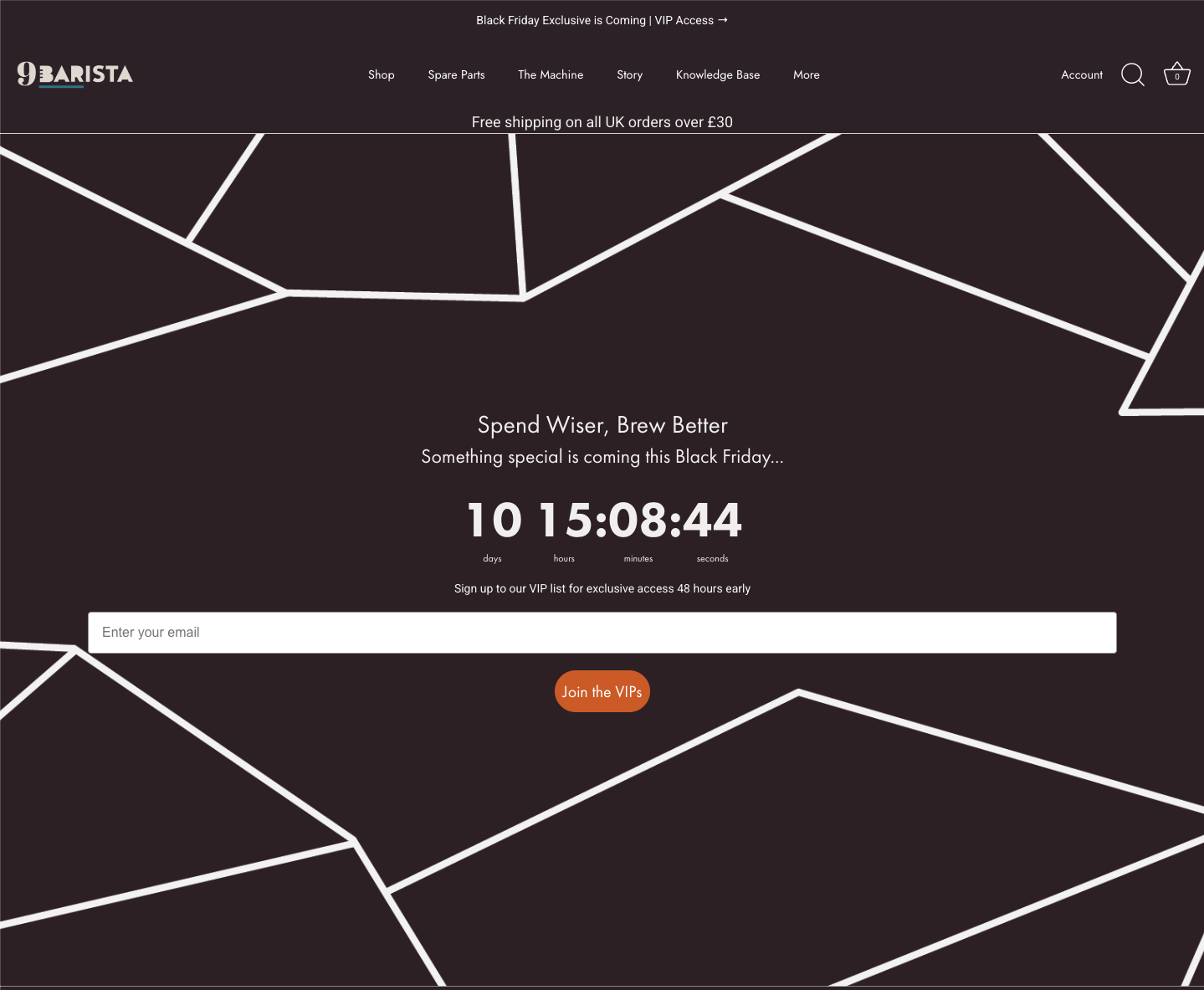
Black Friday also works especially well with scarcity-based copy and assets because it lasts for just a day. Consumers understand deals are time-limited and are prepared to move quickly because of that.
Here are some ways you can put that to use on your pages:
| Psychological Trigger | Landing Page Application | The Benefit to You |
| Stock-Level Scarcity | For physical goods, display real-time, accurate messages like “Only 3 left in stock” or “Low Stock Alert.” | Triggers an immediate purchase decision for a desired item. Crucial Note: This must be genuine, as Professionalized Shoppers will spot fake scarcity. |
| Offer Scarcity (SaaS/Digital) | Limit the deal, not the product. Examples: “Lifetime Deal for the first 500 customers only” or “40% off annual plans for new subscribers only.” | Creates a sense of premium, exclusive value that is worth acting on immediately. |
| Exclusivity Scarcity | Use your email list to create a “VIP Early Access” period. The deal is scarce because it’s a reward for a select, small audience. | Builds loyalty while driving a massive wave of high-intent traffic before the public frenzy. |
Scarcity works best when it’s authentic. Consider keeping products that have sold out visible on your pages to reinforce the ‘limited’ aspect of your offer.
3. Social Proof: The Bandwagon Effect Reduces Risk
If FOMO is about fear, social proof is about reassurance. When making a buying decision (and especially during the chaos of Black Friday) people look at what everyone else is doing to feel confident about their own choices.
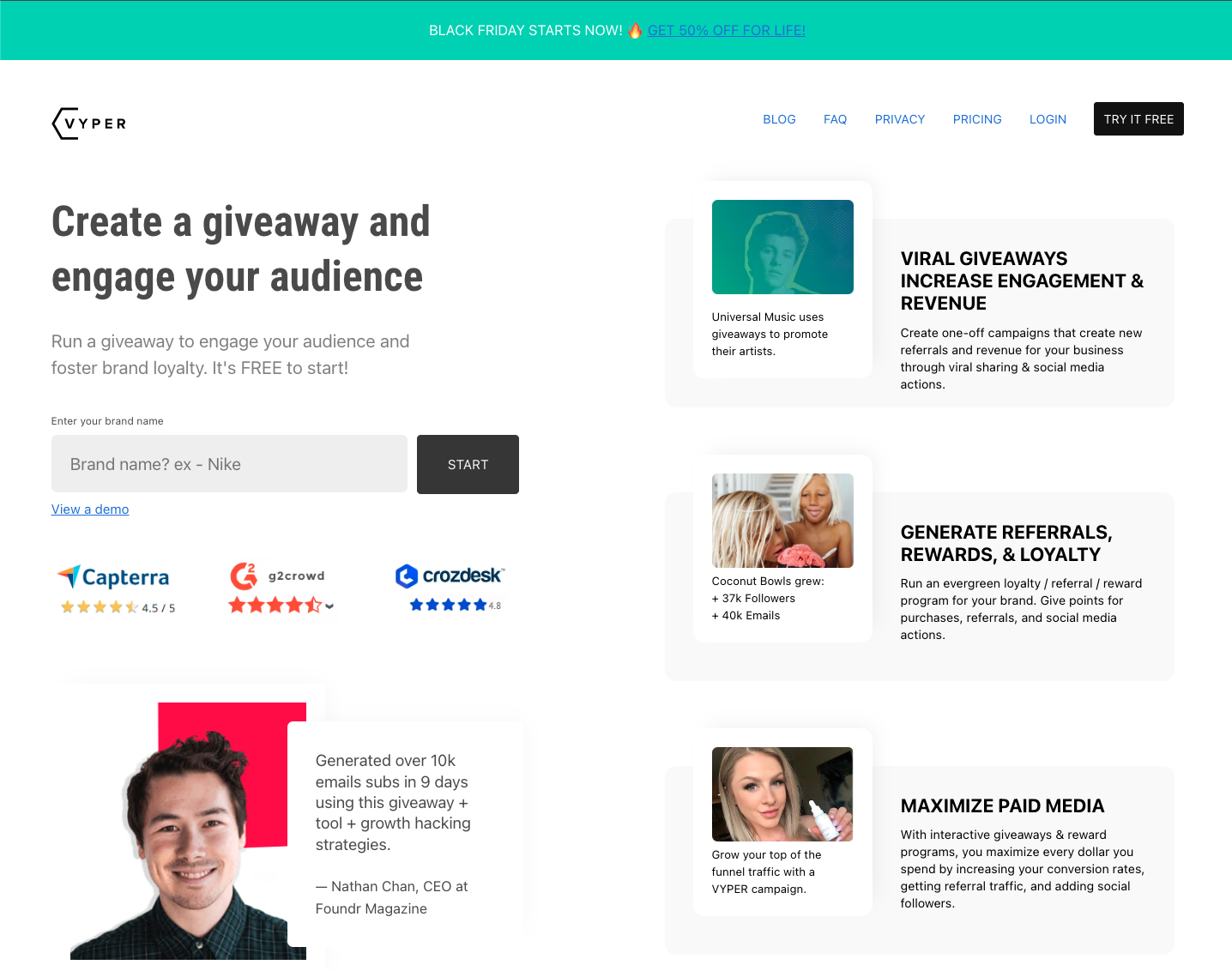
When we see others buying, it validates our own decision and makes the purchase feel a lot less risky. And for first time buyers of your brand? Social proof is not a nice to have, it’s essential for a purchase. And you should spend the time to make it right.
| Psychological Trigger | Landing Page Application | The Benefit to You |
| Reviews & Testimonials | For D2C/Retail: Display star ratings, customer photos (UGC), and product-specific reviews above the fold. | A third-party validator that confirms quality, especially helpful for justifying a new brand purchase. |
| “Wisdom of the Crowd” | Use dynamic, real-time stats: “50 people have bought this in the last hour” or “2,000 teams use this feature.” | Shows momentum and confirms the popularity and reliability of the product. |
| Trust Logos | For B2B/SaaS: A “wall” of recognizable client logos (“As used by Google, Asana, etc.”). For D2C: Media mentions (“As seen in Vogue” or “Featured in Forbes”). | Communicates instant, high-level credibility to the skeptical Intentional Shopper. |
Tailor your social proof! Don’t just pick something generic, take the most powerful feedback from customers that best match your ICP.

4. Value Anchoring: The Power of Contrast
2025’s Intentional Shopper is hunting for a deal, but they need to know how much of a deal they are getting. Value isn’t determined in a vacuum; it’s determined relative to an “anchor.”
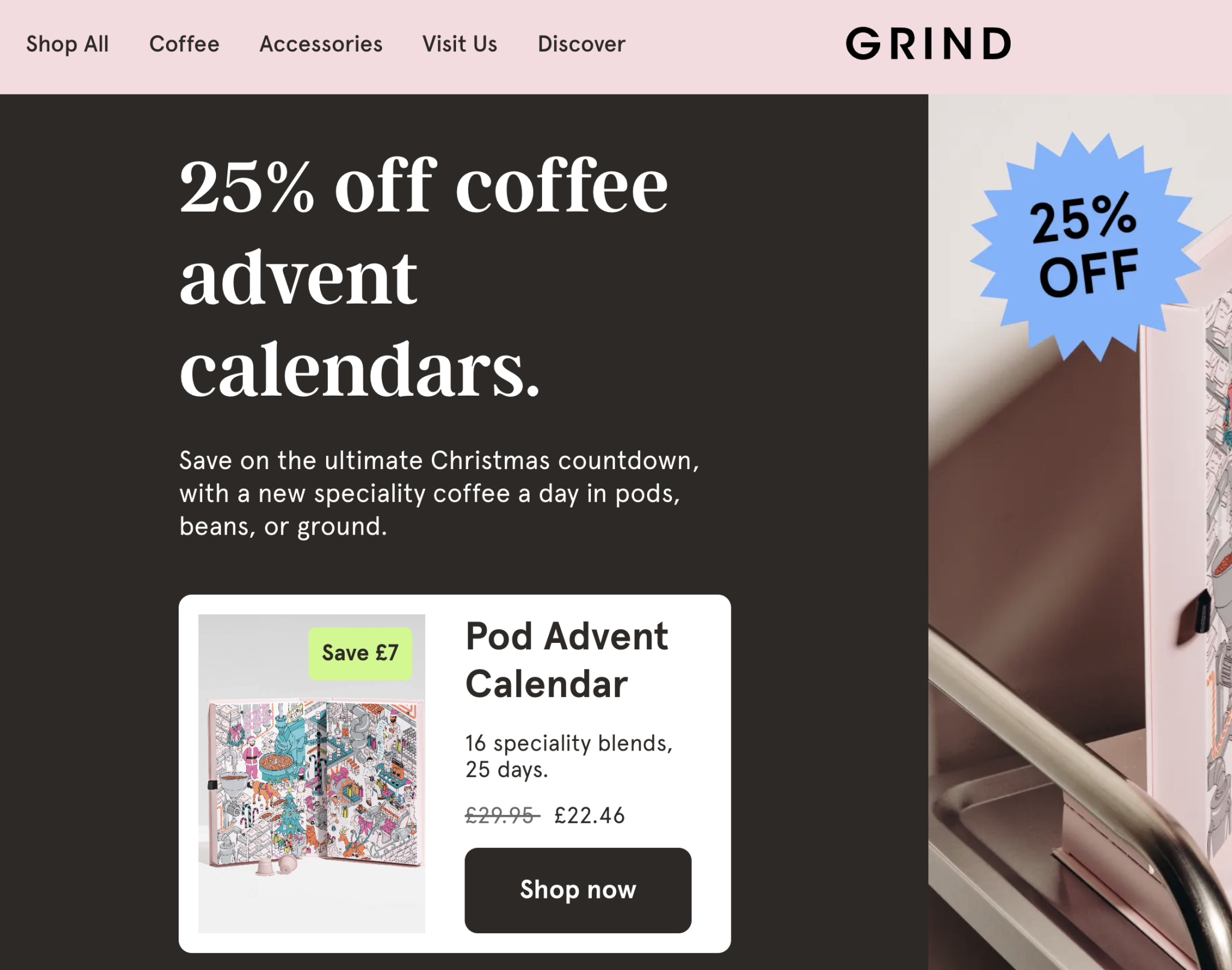
Consumers are wary of deals now. Black Friday has been around for years, and many people are aware that “deals” aren’t always as good as brands wish to paint them. This increased scepticism presents a challenge, but also an opportunity. Let’s explore how.
| Psychological Trigger | Landing Page Application | The Benefit to You |
| Clear Price Display | The strike-through price (“Was: $199 / Now: $99”) must be the most visually dominant pricing element after the sale price. | Establishes the contrast immediately. This is the Justification the pre-researched shopper needs. |
| Emphasize the Savings | Never force the customer to do math. State the savings clearly and boldly: “50% OFF” or “Save $100.” | Makes the financial benefit the hero of the headline and the hero section. |
| Justify the Discount | A deep discount can sometimes damage perceived value for premium brands. Anchor the reason for the deal: “Our Once-a-Year Thank You Sale” or “Black Friday – Lock in this price for life.” | Maintains the high perceived value of your product while still delivering a massive discount. |
Keep your offers easy to understand. Make it attention-grabbing, and update your copy to make sure it emphasises and reinforces that impact.
Improve The Conversion Of Your Black Friday Pages
If shoppers are using AI to shop smarter, it’s only fair we get a little AI backup too…
That’s where the InnerCircle steps in, your built-in crew of AI teammates who help you clean up your page before it goes live. They catch the stuff you’ve stopped noticing, the “meh” headline, the mismatched CTA, that section that looks great but doesn’t really sell.
Basically, this crew is that second pair of eyes you wish you had before launch. Before the madness starts, run your page through them, fix what’s slowing you down, and give yourself one less thing to stress about.
Don’t try to add too many elements. Try out a few techniques that most suit your product and your brand.

Your future self (and wallet!) will be so glad you did. Click here to Add your landing page URL and see what they can find for you.